
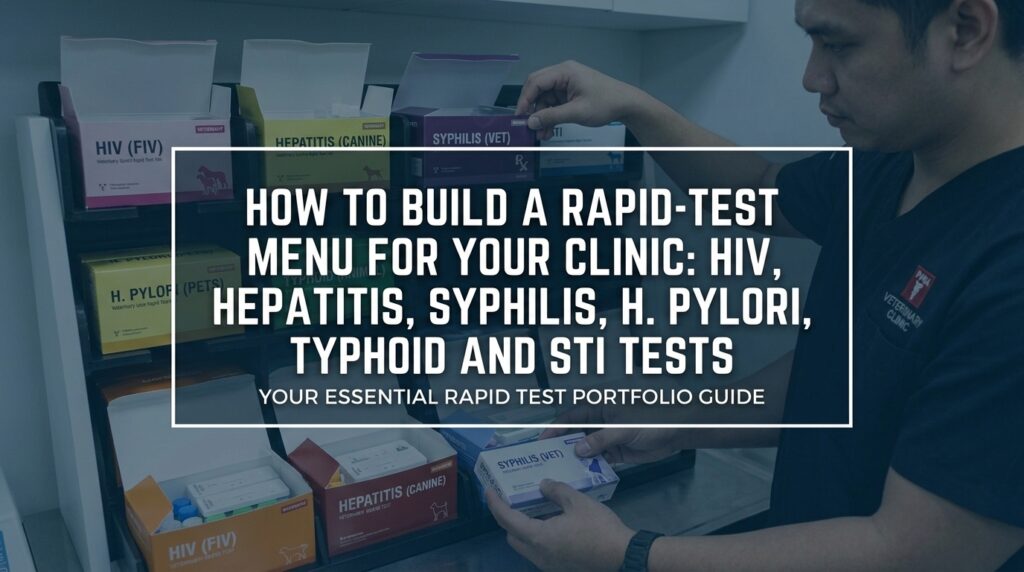
Choosing which rapid tests to offer starts with understanding the patients your clinic serves. HIV, hepatitis, and syphilis screening may be relevant to prenatal and other clinical services, while H. pylori testing is used for certain gastrointestinal concerns. Chlamydia and gonorrhea testing also requires appropriate diagnostic methods. Reviewing patient needs, existing laboratory referrals, and monthly testing requests can help clinics build a more practical test menu.
Which Rapid Tests Should a Primary-Care Clinic Offer?
Opening a clinic can require you to make many decisions when considering what tests you want to offer. Whilst there are many products available, it is easy to assume that the more tests you offer the better your service will be. However, your needs may not be the same as a diagnostic lab or women’s health facility.
Instead look at what patients you regularly see, what tests are typically being requested by your doctors, what samples are being sent away and what services are your patients regularly asking for?
When choosing rapid test kits to offer your clinic, you will need to ensure they suit the needs of your patients, your staff and the tests you are legally allowed to offer.
What Tests Do You Need For Pre-Employment And Prenatal Screening?
Pre-employment and prenatal screening may require some lab testing but will differ depending on the type of clinic. Company clinics may require more medical testing relating to occupational health whereas OB-GYN clinics will often require testing for monitoring the health of pregnant patients.
During prenatal care, doctors may wish to screen patients for HIV, hepatitis B and syphilis. Hepatitis C may also be considered. This helps healthcare professionals to identify any infections that may need further investigation or treatment.
However, when doing pre-employment screening, HIV testing should not automatically be offered. In the Philippines, Republic Act No. 11166 covers individuals through informed consent, confidentiality and protections against discrimination due to HIV. Clinics should ensure they are aware of any requirements.
How Can You Choose The Correct HIV Rapid Test?
Careful consideration should be taken when offering HIV testing. Consider how the test is performed, who can perform it and how the results will be given to the patient.
Ensure the HIV rapid test kit you choose is suitable for your patients. Look at the manufacturers guidelines, sample types, performance and whether it is registered with the Philippine FDA. It is important to note that a positive screening test does not automatically indicate a diagnosis of HIV. Any further testing should follow the correct algorithm.
Ensure patient confidentiality throughout the process. Ensure consultations are done discreetly and results are only seen by authorised personnel. Ensure there are clear processes in place for informed consent, counselling and documentation if you wish to offer HIV screening.
Why Should You Offer Hepatitis B & C Testing?
Both Hepatitis B & C can affect the liver. Often there will be no symptoms. Patients may not realise they have an infection and feel well for years. Therefore screening can be important for those fitting the correct clinical criteria.
A rapid test for Hepatitis B (HBsAg) will detect Hepatitis B surface antigen. This may indicate an active infection. However further testing may be required by doctors to understand the patient’s Hepatitis B status. This can help understand if it is acute or chronic.
Testing for Hepatitis C will involve an antibody test. This will show if the patient has been exposed to the virus. However, a positive result does not automatically indicate an active infection. Generally HCV RNA testing will be required to determine if the infection is active. Clinics offering this service should have a clear process in place for further testing.
When Should You Offer A Syphilis Rapid Test?
If your clinic offers prenatal care, sexual health consultations or other services, syphilis screening may be relevant. As some people with syphilis will have no obvious symptoms, appropriate screening can help identify any infections.
A rapid test for syphilis will often detect antibodies to the bacteria Treponema pallidum. However care should be taken when interpreting the result. Antibodies can still be present following treatment.
Doctors will often use a combination of treponemal and non-treponemal tests. Other tests like RPR or VDRL can help determine the activity of the disease and how it is responding to treatment. Ensure there is a reliable process in place for further testing and referrals if you wish to offer screening.
How Can You Offer Confidential STI Testing?
Some patients may be uncomfortable with STI testing. They may be concerned about their privacy, how their information will be handled or feel judged. Clinics can help by ensuring they create a comfortable environment.
Any clinic offering STI testing should have clear processes in place for confidential consultations, informed consent and secure medical records. Healthcare professionals should also explain what the tests are looking for.
Consider how results will be given to patients. Who will explain a positive screening result and where they will be referred if they require treatment or further testing. This will help ensure patients are treated with respect and confidentiality.
Should You Offer Chlamydia & Gonorrhea Rapid Tests?
Chlamydia & Gonorrhea can cause symptoms such as abnormal discharge or discomfort when passing urine. However many infections will not cause any obvious symptoms. Doctors may wish to screen based on the patients clinical history and risk factors.
When considering a chlamydia gonorrhea rapid test, ensure you know what technology is being used. Nucleic acid amplification tests (NAATs) are generally preferred due to their high sensitivity. Depending on the assay, testing can be done using urine or appropriate swabs.
Not all rapid antigen tests will be as good as a lab based NAAT. Ensure you look at the manufacturer’s performance information. If you are unable to offer an appropriate test, it may be better to work with an accredited laboratory.
When Would H. pylori & Typhoid Testing Be Useful?
Not all patients attending your clinic will need to be screened for infectious diseases such as HIV or STIs. Some may be attending due to ongoing stomach issues or persistent fever. Depending on what services your clinic offers, you may wish to consider further diagnostic testing.
An H. pylori rapid test may be useful if doctors suspect an infection caused by Helicobacter pylori. Stool antigen or urea breath tests are commonly used to detect an active infection. This will depend on the patient’s condition.
A typhoid rapid test should be used with care. Rapid antibody tests may not be as reliable. Blood cultures are preferred for diagnosing. Ensure you are following the correct medical guidelines when choosing tests for patients with persistent fever.
How Can You Ensure You Offer The Right Tests?
Ensure you are offering the correct tests for the services you offer. For example, an OB-GYN clinic may regularly receive requests for prenatal infectious disease screening. Whereas a urology clinic may receive more consultations relating to urinary symptoms or STIs.
Company clinics and general clinics may have different testing requirements. Rather
than buying the same products as large laboratories, consider what tests are regularly requested by your doctors and what tests are being referred.
Below is a simple guide to get you started. It is not a list of tests that all patients will need. Testing should be done based on medical indications, Philippine requirements and what tests you are legally allowed to offer.
Suggested Rapid-Test Menu Planning Guide
Test | Specimen Type | Common Clinical Use |
HIV Screening | Blood-based specimens, depending on assay | Authorized HIV screening |
Hepatitis B (HBsAg) | Blood-based specimens | Hepatitis B screening |
Hepatitis C (anti-HCV) | Blood-based specimens | Initial hepatitis C screening |
Syphilis | Blood-based specimens | Prenatal and appropriate STI screening |
H. pylori | Stool, breath, or approved specimens | Assessment of suspected H. pylori infection |
Typhoid | Assay-specific specimens | Selected investigations; blood culture preferred for diagnosis |
Chlamydia and Gonorrhea | Urine or appropriate swab specimens for NAAT | STI screening and assessment |
Specimen requirements and intended uses vary by product. Always check the manufacturer’s instructions and the applicable diagnostic guidelines.
How Can You Work Out How Many Tests You Use Per Month?
One of the easiest ways to ensure you do not run out of products is to work out how many tests you use per month. Looking at the last 3-6 months will give a better indication of how much you regularly use.
If you regularly use around 50 Hepatitis B screenings per month, this can be used as a starting point. You will also need to consider how long it takes for products to be delivered. Do you tend to get more requests at certain times?
Some things to consider:
- Number Of Patients – How many patients regularly require this test?
- Stock – How many usable kits do you have?
- Delivery Times – How quickly can your suppliers deliver?
- Expiry Dates – Will the kits be used before they expire?
- Extra Stock – Do you need a little extra stock for unexpected demand?
By keeping these points in mind, you can ensure you are not buying unnecessary products.
What Should You Consider When Purchasing Rapid Test Kits?
Whilst two rapid test kits may look similar, they may not function the same. Some detect different infection markers whilst others may require specific samples. This can affect if they are suitable for your clinic.
Ensure you ask for product information and instructions for use from the manufacturer. Ensure they are registered with the Philippine FDA. Look at the storage requirements, expiry dates, any equipment or quality control requirements. Ensure your staff are appropriately trained.
Price will obviously be a consideration but you should not just choose the cheapest option. It may not be appropriate for what you wish to offer. Ensuring they are reliable, available from suppliers and what further testing is required can help reduce any issues.
How Can MEDTEK Help You Review Your Test Menu?
Requirements can change over time. You may start offering general consultations but then decide to add prenatal screening, gastrointestinal testing or more infectious disease services based on patient demand.
Rather than adding new tests without a plan, consider what you already offer. What tests are regularly requested? Are there any gaps in your testing? Are you spending too much on kits that are not being used?
MEDTEK can provide information on what diagnostic products we can offer. Our related article on Dengue NS1, IgG/IgM & Duo Testing will be available for you to view once published. For any product questions or to discuss an Infectious Disease Test Menu Review, visit our contact page.
Frequently Asked Questions
What rapid tests should I offer as a primary care clinic?
This will depend on what patients you see. Depending on your clinical needs and what testing you can offer, HIV, Hepatitis, Syphilis and more may be appropriate.
Do I need to offer HIV testing as part of pre-employment screening?
No. HIV testing should not be automatically offered. In the Philippines we have laws in place to protect individuals through informed consent, confidentiality and protection against discrimination due to HIV.
Who should be screened for infectious disease during prenatal?
During prenatal care, pregnant patients may be offered screening for HIV, Hepatitis B, Syphilis and more depending on guidelines.
Can rapid tests be used instead of lab based testing for STIs?
Not always. Some infections require more sensitive testing or further investigations. Doctors should follow the correct diagnostic guidelines.
How many rapid test kits should I order per month?
Look at how many tests you have requested in the past, how many you have in stock, expiry dates and how quickly your suppliers can deliver.
Create A Suitable Rapid Test Menu
You will not need to offer every rapid test. Ensure you have the correct tests for your patients, trained staff and clear processes.
Taking the time to consider what you offer and what you have in stock can help you avoid buying unnecessary products. Ensure you have what is regularly requested.
If you are looking to expand your testing services, contact us at https://medtek.com.ph/contact-us-medtek/ to enquire about an Infectious Disease Test Menu Review. We can also provide information on what diagnostic products we can offer.
For licensed and trained healthcare professionals. All rapid tests must be used according to their approved intended purposes, manufacturer’s instructions, and applicable Philippine regulations. Screening results may require further testing and medical evaluation.