
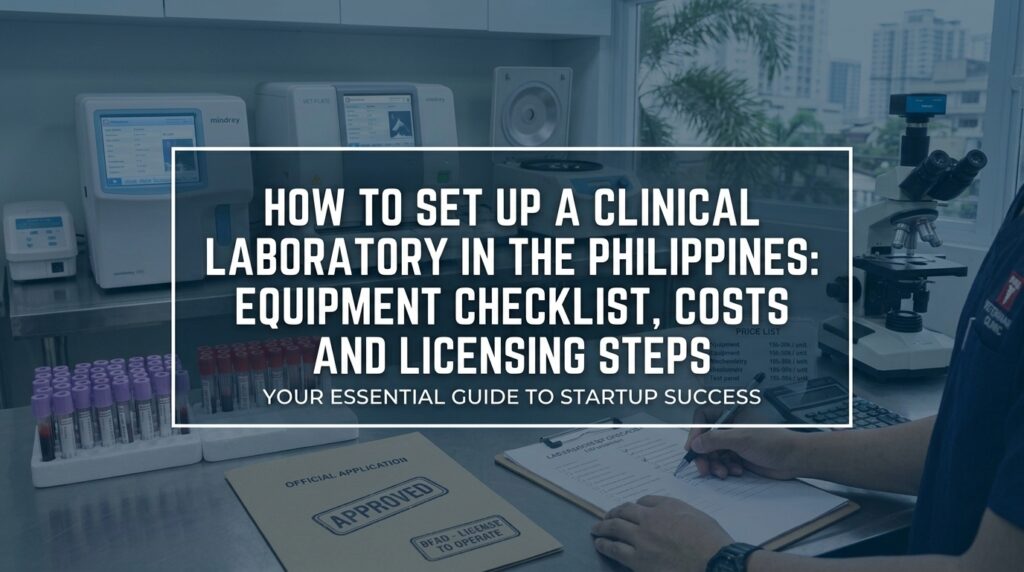
Setting up a clinical laboratory in the Philippines requires a Department of Health (DOH) license to operate, qualified laboratory personnel, suitable facilities, and equipment that matches the services offered. Depending on the laboratory’s approved classification, equipment may include chemistry, hematology, electrolyte, and urine analyzers, along with a reagent refrigerator and other essential supplies.
For new laboratory owners, the challenge is knowing where to begin. Buying equipment is only one part of the process. Staffing, licensing, quality control, maintenance, and operating costs also need attention before opening. Planning these requirements early helps prevent unnecessary purchases, delays, and unexpected expenses.
What Are the First Steps in Setting Up a Clinical Laboratory?
If you’re looking to open a diagnostics lab it can be helpful to get an understanding of what services you want to provide. Do you want to offer basic blood and urine tests or offer a wide range of diagnostic services?
If you’re looking into setting up a clinical laboratory in the Philippines it can be helpful to get an understanding of what the DOH requires. Different laboratories require different requirements.
It can also be helpful to understand what sort of budget you’ll need to invest in. Understand the costs of renting a space, renovations, staffing, equipment and monthly running costs. Speak to the correct DOH regulatory body to understand what your laboratory will need.
DOH Requirements for Licensing Clinical Laboratory
All clinical laboratories in the Philippines must have a relevant DOH License to Operate. The key document you’ll need to look out for is DOH Administrative Order No. 2021-0037 detailing the requirements.
This isn’t just about having the correct equipment. Requirements will include having the correct facilities, staffing, quality assurance, safety measures and processes. Depending on the type of laboratory you’ll need qualified staff which could include a designated laboratory manager and registered medical technologists.
As requirements can vary depending on the services you plan to provide, it’s important not to rely on an outdated checklist. Ensure you’re looking at the latest DOH releases and assessment tools to ensure you don’t incur any extra costs.
Basic Clinical Laboratory Equipment
The equipment you buy will depend on what tests you plan on offering. If you’re offering basic blood chemistry and CBC tests in a clinic you won’t need the same equipment as a hospital laboratory.
Common laboratory equipment will include:
- Chemistry Analyzer – For testing specific tests such as blood sugar, cholesterol and creatinine levels.
- Hematology Analyzer – Complete blood count and other blood cell testing.
- Electrolyte Analyzer – Test Sodium, Potassium and Chloride levels, along with other supported electrolytes.
- Urine Analyzer – To help with processing routine urine tests.
- Centrifuge – To separate different parts of samples.
- Refrigerated Reagent Storage – To store different reagents and controls that require specific temperatures.
You’ll also have smaller requirements such as pipettes, specimen tubes, safety equipment and quality controls. Your equipment will depend on your approved tests and the DOH requirements.
Which Analyzer Should I Buy First?
A common question new lab owners ask is which analyzer to buy. The answer will depend on what tests you want to offer and what your patients need. Often you’ll want to start off with a chemistry and hematology analyzer. This will help with commonly requested tests such as blood sugar, cholesterol and kidney function.
Complete blood counts will be a frequent request using a hematology analyzer.
It’s important to understand how many tests you’ll expect to run daily and what each will cost to run.
Sometimes you might think a large analyzer will be a good investment but if you’re only testing a low volume of samples it may not be practical.
Ensure you’re investing in lab equipment that fits the volume of work and can provide for reasonable growth.
What to Look for in a Chemistry Analyzer?
Chemistry analyzers can be used for many routine tests in a lab. Due to being common requests it’s important to choose the correct equipment.
When choosing a chemistry analyzer for use in laboratories in the Philippines it’s important to understand what reagent requirements, maintenance, calibration, sample capacity and technical support will be required. This can affect how much it costs to run and how it can affect your daily lab work.
We offer the XL-200 Full-Auto Chemistry Analyzer from MEDTEK. This can handle 200 photometry tests per hour. However, it’s important to ensure this fits your lab workload, budget and test requirements.
Choosing a Hematology Analyzer
A common analyzer used in labs is a hematology analyzer for complete blood counts. This includes measuring your red blood cells, white blood cells, hemoglobin and platelets. Complete blood counts are commonly requested so many diagnostic labs will include this as a core service.
Often you’ll find a three-part and five-part differential analyzer. This refers to how the analyzer identifies your white blood cells. This will depend on what tests you want to run. We offer the URIT-3000Plus 3-Part Differential Hematology Analyzer from MEDTEK. This can process 60 samples per hour. Ensure you understand what reagent usage, sample requirements, maintenance and support is required.
Why Consider Electrolyte and Urine Analyzers?
Depending on what tests you’re offering it may be useful to invest in electrolyte and urine analyzers. These are commonly requested when doctors need to know about your kidney function, fluid balance and other health issues.
The electrolyte analyzer will measure specific electrolytes such as sodium, potassium and chloride. We offer the Electroline 100 Electrolyte Analyzer from MEDTEK which uses Ion Selective Electrode Technology.
Urine analysers can help with processing specific urine parameters. Depending on what test you’re performing you may still need to do further steps such as microscopy. Ensure you understand how often you expect to run these tests in your lab. Invest in equipment you’ll be using regularly.
Other Lab Equipment and Supplies
Whilst you may focus on the bigger analyzers it’s also important to consider the smaller equipment required for everyday lab work.
Centrifuges will be needed for some sample preparation processes. Refrigerators will help keep your reagents and controls stored correctly. Some labs may need microscopes, pipettes, thermometers, sample containers and other consumables.
Also consider everyday lab items such as gloves, disinfectant, needles, specimen tubes and quality controls. Ensuring waste management and biosafety protocols are in place. Create a full list of what equipment you’ll need based on the tests you’re performing to ensure you don’t have your main analyzers but don’t have the essential supplies to begin testing.
How Much Does it Cost to Set Up a Clinical Laboratory in the Philippines?
One of the main concerns when opening a lab is the cost. Unfortunately there isn’t a set price for all facilities. A small diagnostic centre offering a limited number of tests will have different costs to a larger lab with multiple automated analyzers.
Your budget will depend on what equipment you choose, size and condition of your location, staffing requirements and tests you want to offer. You may also incur costs for renovations, installation, licensing and initial supplies.
It can be useful to understand what your startup costs and monthly costs will be. Equipment and renovations will typically be a one off cost. However you’ll incur monthly costs for rent, staffing, reagents, utilities, quality controls and maintenance. Ensure you ask for detailed quotes so you’re working with realistic figures.
Can I Finance Clinical Lab Equipment?
Lab equipment can take up a big chunk of your budget. As a new lab owner you may not want to spend a lot of money on multiple analyzers. Especially when you have renovation and staffing costs to consider.
Some equipment providers may offer financing, leasing or reagent agreements. This can help spread the cost. However this will depend on the provider. Ask to confirm.
Ensure you understand how much you’ll be paying overall. Ask who owns the equipment, if there’s minimum reagent requirements and what maintenance/repair services are included. Even if you’re paying less upfront it doesn’t always mean you’ll be saving money.
When Should I Consider Automating a New Clinical Laboratory?
Automating can be helpful in a lab. However you don’t need to invest in the most advanced equipment straight away.
If you’re not testing a high volume of samples a smaller automated analyzer may be sufficient for your daily lab work. However if your demand increases you may find your staff are spending more time doing repetitive tasks such as sample preparation, loading and data entry. Investing in automated equipment can help reduce this.
Consider how your lab is running. Are your staff spending too much time on repetitive tasks? Is the equipment struggling to keep up with your daily test requirements? Are you getting delays in reporting? This can help determine if investing in a more automated system will be worth it.
How Can Labs Work Out Their ROI?
Before investing in an analyzer it can be helpful to ensure you can support the investment with the volume of tests you expect. A high volume analyzer may look impressive but if you’re only testing a small number of samples daily you won’t make enough money.
Estimate how many tests you expect to run and how much money you could make. Consider how much reagents, consumables, quality controls, calibrations and other costs you’ll incur.
Also consider how much you’ll be paying monthly for staffing, rent, utilities, maintenance and financing. This can help you understand if it’s a viable investment.
Ensure your estimates are realistic as patient volume, running costs and equipment usage can change.
What is a Lab Starter Pack?
When setting up a lab you’ll need to choose multiple pieces of equipment. This can become complicated if you’re buying them individually and each piece of equipment will have different requirements.
A lab starter pack will include the equipment based on what tests you want to offer. Depending on your test menu this can include chemistry, hematology, electrolyte and urine analyzers.
A small diagnostics lab may start off with chemistry and hematological equipment. However this shouldn’t be seen as a set list. Ensure the equipment you’re investing in fits the services you’re proposing to offer, DOH licensing category, space available and budget.
How Can MEDTEK Help You Plan Your Clinical Laboratory?
There are many decisions to make when planning your clinical laboratory. New lab owners need to consider what tests they’re offering, how many samples they’ll be testing and if the equipment will fit in their space and budget.
We supply diagnostic equipment to healthcare institutions in the Philippines. This includes chemistry, hematology and electrolyte analysers.
If you’re looking to open a diagnostics lab it can be helpful to speak to us about what tests you want to offer and how much work you expect. This can help you choose a set up that makes sense for your lab.
Frequently Asked Questions About Setting Up a Clinical Laboratory
What equipment do I need for a basic clinical laboratory?
Depending on what services you offer you may need a chemistry, hematology, electrolyte and urine analyzer. You’ll also need centrifuges, refrigerators and everyday supplies.
What are the DOH requirements for setting up a clinical laboratory?
Labs will need to meet the relevant DOH licensing requirements. This includes facilities, qualified staff, equipment, quality assurance, safety and processes.
Who can operate a clinical laboratory in the Philippines?
Individuals or organizations can set up a laboratory. However the lab must meet the licensing requirements and have the correct qualified healthcare professionals.
How much does it cost to set up a laboratory?
This will depend on the size of the facility, equipment, staffing, renovations and services. The best way to create a realistic budget is to ask for detailed quotes.
Can I finance clinical lab equipment?
Some providers may offer financing, leasing or other purchasing options. Ensure you confirm what’s available, how much you’ll be paying and what services are included.
Begin Planning Your Clinical Laboratory
Opening a clinical laboratory requires careful planning. Ensuring you have the correct license, equipment and understanding of what your running costs will be can help prevent you from spending unnecessarily.
Whether you’re opening a small diagnostics centre or growing an existing clinic, ensure you’re investing in equipment to fit your testing requirements, space and budget.
If you’re planning to set up your lab, visit https://medtek.com.ph/ to find out what equipment is available. We can provide an ROI analysis and demo (subject to confirmation).
For licensed and trained healthcare professionals. All laboratory operations must comply with applicable DOH requirements. Equipment specifications, product availability, financing terms, and regulatory requirements should be confirmed before purchase or implementation.